
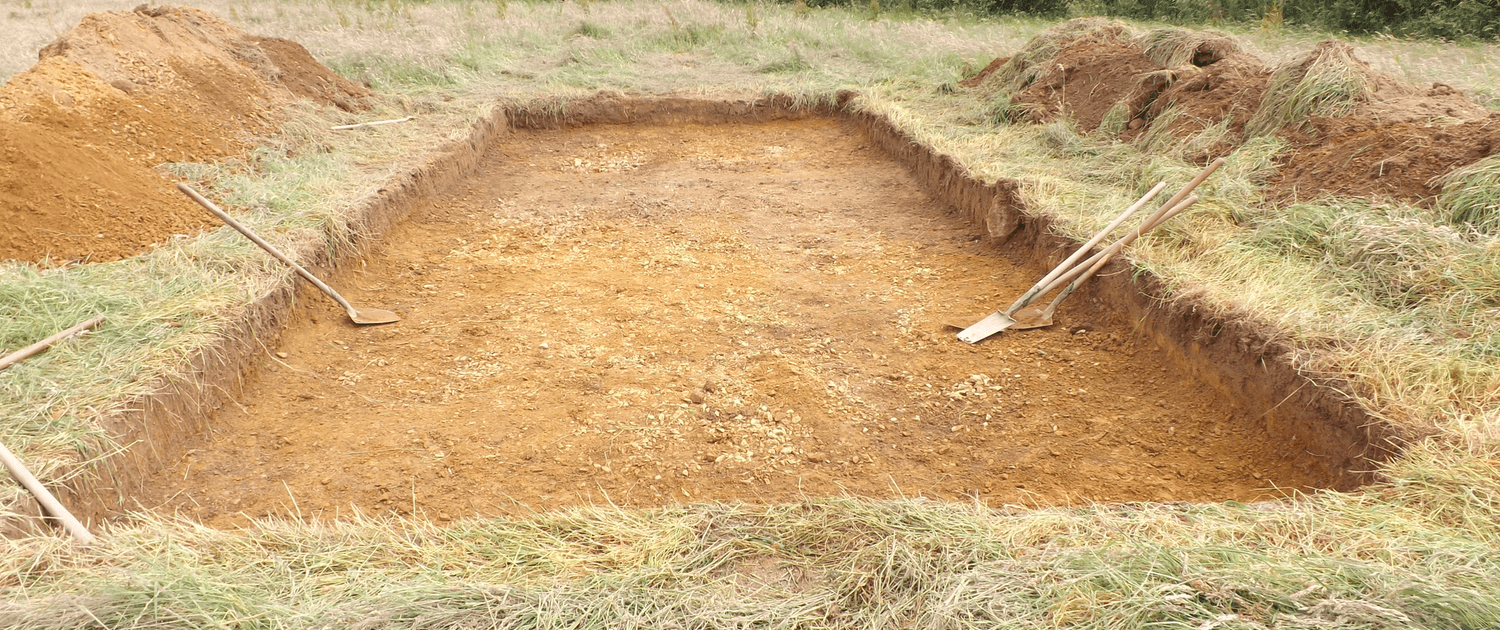
The purpose of test excavation is to establish the nature and extent of archaeological deposits and features present in a location which it is proposed to develop (though not normally to fully investigate those deposits or features) and allow an assessment to be made of the archaeological impact of the proposed development. It is often required for small, medium and large scale developments as part of the planning process where the works are in the immediate vicinity of a known archaeological site or monument. Testing may form part of an archaeological assessment and assist in determining what, if any, mitigation measures such as further excavation or monitoring is required. Archaeological testing is also referred to as ‘test trenching’ and usually involves excavating a number of trenches across the proposed development area with a machine. The process identifies areas where archaeology is present (or not) and the results are then reported to the relevant authorities. Where archaeology is encountered, the licensed Archaeologist will advise on a mitigation strategy. Archaeological Testing is licensed under the National Monuments Service of the Dept. of Arts, Heritage, Regional, Rural and Gaeltacht Affairs which means the works cannot take place without agreement from the relevant authorities.
Planning conditions may also stipulate that ground works on a development must be monitored by a suitably qualified archaeologist so as to identify and protect archaeological deposits, features or objects which may be uncovered or otherwise affected by the works. A general monitoring requirement or ‘watching brief’ is normally given as condition of a grant of planning where there is some probability for the recovery of archaeological material. Although the monitoring archaeologist does not legally require an excavation licence for the works, it is strongly recommended by the National Monuments Service so as to prevent delays arising in the event of archaeological deposits, features or objects being exposed which require excavation. During archaeological monitoring, if any material is deemed archaeological in nature, the ground-works must stop pending a decision from the National Monuments Service.
